
4 actors
One session = a CPO, a host, an eMSP, an energy supplier. Reconstructing net revenue = a mini-clearing each month-end.
Energy reimbursements, commissions, eMSP clearing, bank exports — all computed, generated and sent automatically. One platform to run your chargers and bill what comes out of them.
EV charging has standardized OCPP, OCPI, ISO 15118 smart charging in under ten years. But its financial backbone remains largely artisanal: a 14-tab spreadsheet, rebuilt by hand every month, with a broken formula discovered in March on January's numbers.
One session = a CPO, a host, an eMSP, an energy supplier. Reconstructing net revenue = a mini-clearing each month-end.
error rate on financial flows: missed sessions, wrong rates, roaming double-counting. Observed on spreadsheet-run operators.
average delay between month-end and B2B billing. Cash comes in later than what your product actually sold.
Generalist ERPs (SAP, Sage, Odoo) can't natively manipulate CDRs, index a per-kWh price against a variable-rate supply contract, or distinguish a local session from a roaming session. The result: you end up stitching things together.
Not a third-party integration to maintain. Not another tool to buy, train and monitor. One backend that runs your chargers and knows how to bill what comes out.
For each session, the host credit is computed automatically — actual consumption (CDR) crossed with the contractual conditions defined upstream. Exportable in your accountant's format.
For variable-rate supply contracts (the standard since 2025), indexing happens per session against the purchase price applicable at the moment of charging. Impossible to do by hand beyond a few chargers.
Combinable models: per-transaction commission, per-kWh delivered, monthly flat fee, per user profile, per site, per badge. Defined once, applied without intervention.
Monthly fee per supervised charger (AC vs DC), SIM subscription, RFID badges, maintenance, options. All contract lines consolidated into a single PDF, readable by the client's accounting.
Direct billing of your eMSP partners (ChargeMap, Plugsurfing, Last Mile Solutions…) based on CDRs. D−7 control window, detailed XLS export, PDF invoice sent, automatic payment reconciliation.
Credit notes and transfers exportable as standard XML ISO 20022, ready to upload into any corporate or treasury bank interface. Zero re-entry.
Define the counterparty, the applicable economic model, billing periodicity, payment terms and accounting recipients. Set up once, executed automatically each cycle.
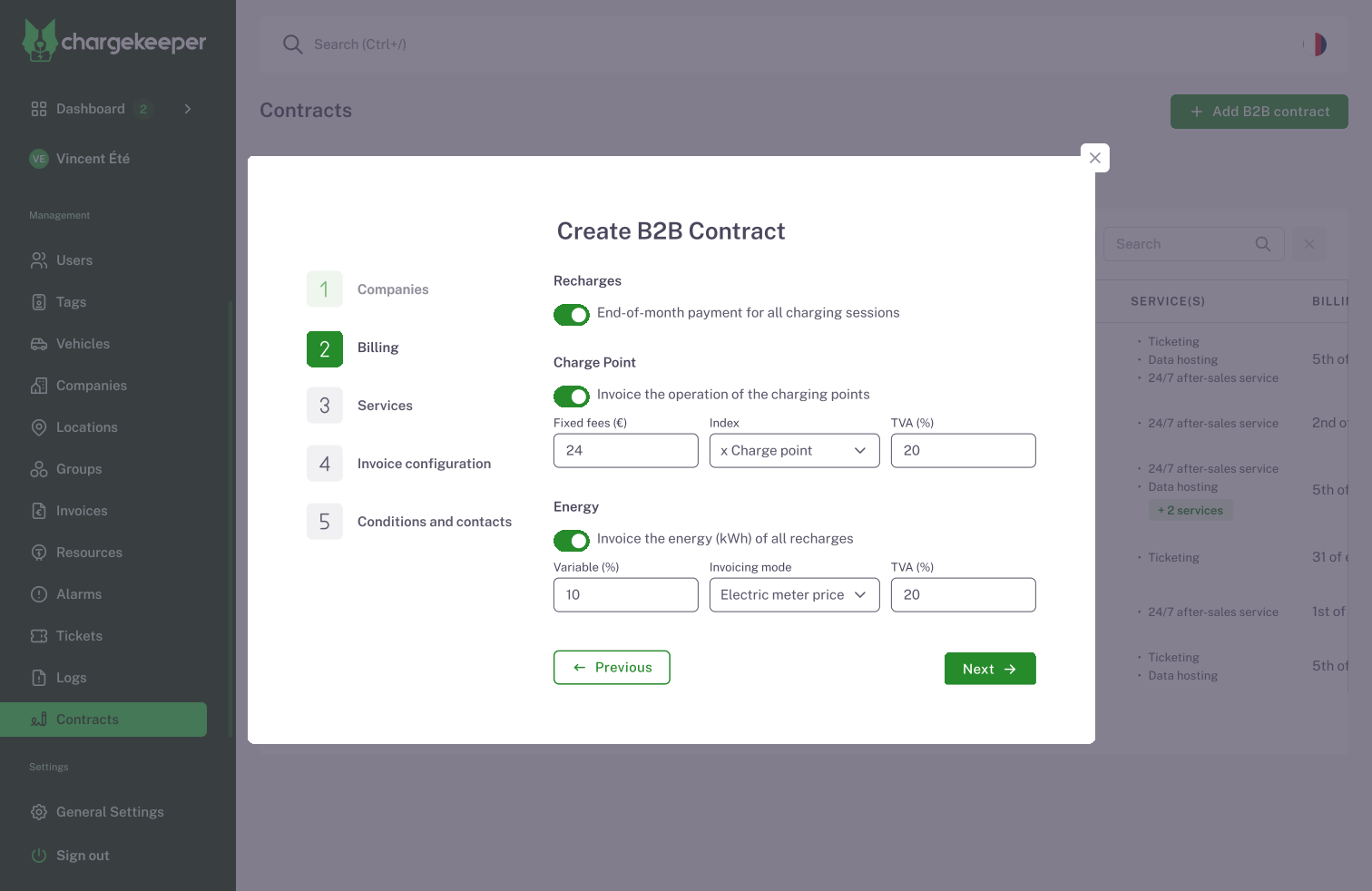
Host, eMSP, B2B client — each economic partner has its own record, with accounting contacts and recipients.
Select in the advanced pricing module: per-kWh tariffs, per-session, indexed, with or without time-of-use brackets. Combinable.
Monthly, quarterly, ad hoc. Payment terms (net 30, end-of-month 60…) set in the contract.
On the 1st of the following month: invoices issued, credits generated, accounting exports available. Finance reviews and triggers payments from the bank.
You operate a charger fleet in your own name or for third parties — and you want to stop hand-crafting host reimbursements.
You host third-party chargers on your sites — and you want to receive energy reimbursements at the fair price, on time, without disputes.
You want to exit the all-hub model (GIREVE, HUBJECT) and bill your large eMSP partners directly in peer-to-peer.
From B2B operators who moved their billing off Excel onto Chargekeeper.
No more 14-tab Excel rebuilt by hand each month.
From D+45 to D+5 between month-end and invoices going out.
Source of truth is the OCPP CDR — nothing slips through the cracks.
On B2B operators switching from spreadsheet-based tracking.
More subtly: your commercial team can propose finer conditions to clients — complex revenue-share models, indexed against external grids — without fearing they can't bill them downstream.
Let's spend 20 minutes on your current economic model — we'll tell you what we could automate.
Book a demo