
Switching EV charging supervision: why you shouldn't be afraid
Once chargers are deployed, switching supervision platforms feels risky. Yet, properly prepared, a migration is less risky than staying stuck. Method, data ownership and support.

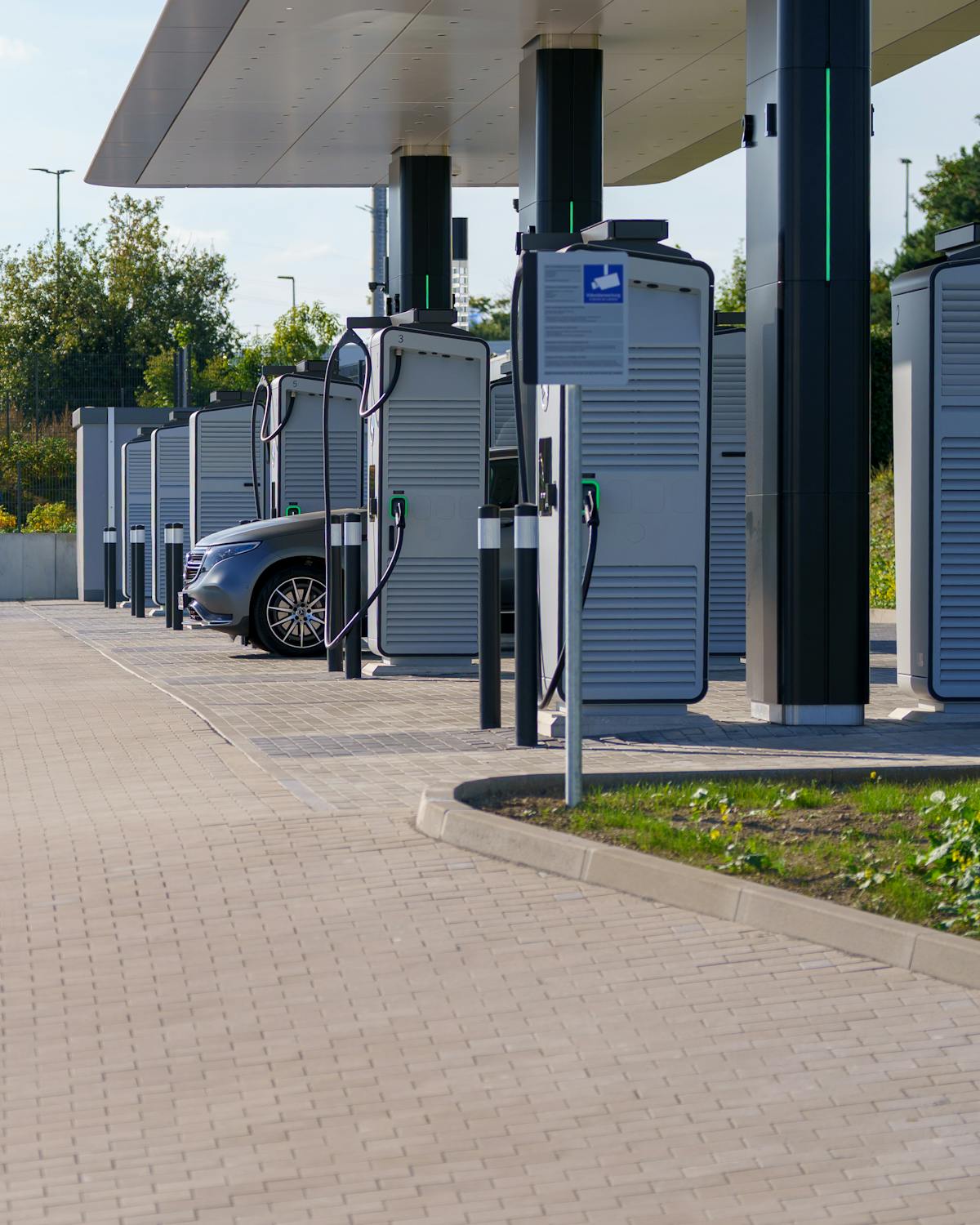
In EV charging, supervision is often seen as a building block that is hard to question. Once the charge points are deployed, customers connected and roaming flows active, the idea of switching platforms can seem risky — even incompatible with the service continuity expected by end users.
Yet, as charging networks grow and uses evolve, many operators question whether their supervision still fits their current challenges. These questions often arise as the business diversifies: new market segments, more industrial projects or heightened operational requirements.
Some operators then realise that their legacy solution no longer lets them address these new use cases effectively. It may show its limits on complex projects such as heavy-truck transport, lack the openness to interface with other business tools, or remain confined to a single geographic scope, currency or tax framework. Managing multiple VAT rates, varied contractual models or specific operational situations then becomes a source of friction, even of deadlock.
In this context, the question is no longer so much whether it is possible to switch supervision, but how to do so in a structured and serene way, in order to support the evolution of the operating model without compromising service continuity.
Why supervision is rarely questioned
Historically, many operators chose their supervision at a time when their networks still had few charge points. Their needs were then relatively simple: basic supervision, session management, elementary billing and first roaming connections.
Over time, these platforms became central building blocks, connected to multiple systems: badges, roaming platforms, internal tools, reporting, sometimes energy management. This accumulation creates a sense of dependence, reinforced by the fear of data loss, service interruption or operational complexity perceived as hard to master.
This apprehension is understandable. It does, however, lead some operators to keep a supervision platform that no longer matches their current challenges — not out of strategic choice, but out of fear of change.
Migrating isn’t necessarily the riskiest option
For already-mature or long-standing operators, the main risk is not always the migration itself. It sometimes lies in keeping a platform that limits the ability to evolve: difficulty integrating new equipment, weak API openness, strong constraints on internationalisation or on managing more complex business models.
A well-prepared migration does not mean an abrupt switchover. It is part of a gradual approach that secures existing operations while preparing the future of the network.
The fundamentals of a successful migration
A supervision migration relies above all on a clear, proven methodology.
The first step is a precise scoping of the perimeter: charge point types, protocol versions, roaming flows, connected tools, contractual and operational constraints. This phase makes it possible to objectify the complexity of the network and identify the real points of attention.
Next comes a gradual takeover of the charge points. The migration can be carried out in batches, by site type or by geographic zone, in order to limit risks and guarantee total service continuity for end users.
Finally, particular attention is paid to coordination with the existing ecosystem: roaming platforms such as Gireve or Hubject, technical partners, internal tools. A successful migration integrates these players into a coherent transition plan, without functional disruption.
The central question of data
The fear of losing data is one of the major obstacles to any migration. Yet one fundamental principle must prevail: the data always belongs to the operator.
At Chargekeeper, this principle is structuring. Supervision data — session histories, consumption, configurations, users, roaming flows — is returned in a usable form, to guarantee its reuse in the context of a takeover or an evolution of the system. This transparency is an essential condition for establishing a lasting relationship of trust.
To date, Chargekeeper has not lost a single customer. Even so, the platform is designed to allow a clear, controlled takeover of the data, should an evolution ever be considered.
Structured support, without service interruption
Chargekeeper regularly supports migration projects covering several thousand charge points. This support spans the entire chain, from initial scoping to coordination with roaming platforms.
Each project relies on well-defined processes, formalised in a precise specification, and on the appointment of a dedicated project manager — the customer’s single point of contact throughout the migration. Their role is to steer the key stages, coordinate the stakeholders and secure operations, with a constant objective: avoiding any service interruption.
Switching EV charging supervision is not a trivial decision, but neither is it a leap into the unknown. When approached methodically, migration becomes a lever to support the diversification of activities, strengthen the openness of systems and prepare the network’s evolution over the long term.
The Chargekeeper teams can help you objectively assess the task at hand, identify the points of attention and build a clear, realistic migration plan, adapted to the maturity of your network — to give you a serene outlook, with no compromise on service continuity or on control of your assets.