
Smart charging & DLM: everything you need to know about intelligent charging
When, how and at what power to charge: smart charging optimises available power, cuts costs and makes the most of renewables. A tour of the mechanisms and the role of the EMS.

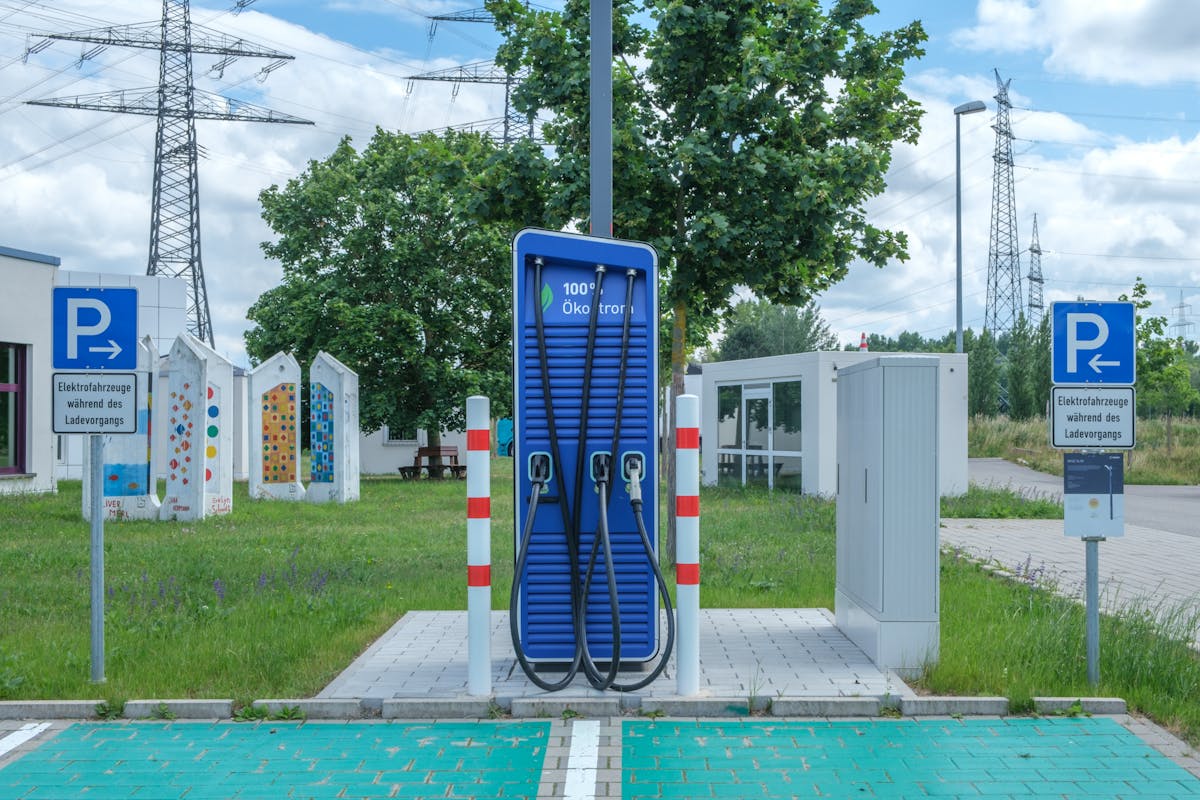
Vehicle electrification (heavy-goods, light commercial and passenger vehicles) is no longer a projection: it is already an operational reality. Month after month, the electrified vehicle fleet is growing at an unprecedented pace, driving a rapid and structural increase in charging needs. This momentum — fuelled by public policy, regulatory and fiscal pressure, and corporate decarbonisation commitments — is putting the entire ecosystem under strain: electrical grids, existing infrastructure and the associated business models. The question is no longer whether electric vehicles will become widespread, but how to deliver reliable, sustainable charging over the long term.
These challenges play out concretely in the field: in companies, where employee and fleet charging has to coexist with the building’s own usage; in apartment buildings, where sharing power becomes critical; at public stations, subject to unpredictable demand peaks. On top of this comes a major constraint: the need to relieve the electrical grid while controlling energy costs and making the most of locally produced renewable energy. In this context, smart charging stands out as a key technology building block. By intelligently steering charging, it not only optimises the use of available power, but also reduces operating costs, preserves battery life and fully leverages renewables. More than an option, it becomes a strategic lever for reconciling mass electrification with energy performance.
What is smart charging?
Smart charging is an advanced approach to electric vehicle charging that aims to optimise the use of available energy. Rather than systematically delivering maximum power at every charge point, it automatically adjusts when, how and at what power vehicles are charged, based on site and grid constraints.
In practice, a smart charging system relies on a supervision platform able to monitor, in real time, the status of charge points, vehicle demand and available electrical capacity. From this information, charging can be sped up, slowed down or temporarily interrupted to avoid demand peaks, respect the subscribed power level and guarantee energy distribution across several vehicles connected simultaneously, according to scenarios chosen by the operator directly on the platform.
With a solution like Chargekeeper, this intelligence becomes automated. The platform orchestrates charging according to defined rules — off-peak hours, usage priorities, grid constraints or renewable energy availability — to ensure reliable charging while limiting the impact on the electrical grid. This ability to steer demand not only secures existing infrastructure, but also reduces energy costs and supports the integration of renewables such as solar and wind.
The role of the EMS in smart charging
Smart charging reaches its full potential when connected to the site’s energy management systems (EMS). By integrating production, consumption and storage flows directly within Chargekeeper, supervision gains a global, real-time view of the energy balance. This interconnection makes it possible to adapt smart charging strategies not only to available power, but to the site’s energy usage as a whole.
Concretely, when Chargekeeper detects, via EMS flows, a temporary rise in consumption linked to industrial equipment or a critical building use, the platform can automatically limit the power allocated to charge points in order to preserve electrical stability. Conversely, when local energy production — solar, for example — is available, charging can be maximised, prioritising low-cost, low-carbon energy. This logic smooths consumption, avoids exceeding power limits and fully leverages renewables.
Beyond energy management, EMS integration also opens the way to more granular business models. The resale price of electricity at the charging station can be dynamically indexed to the origin of the energy consumed: charging powered by solar can be offered at a more attractive rate, while grid-sourced charging can reflect the real cost of energy. By combining smart charging with advanced energy management, Chargekeeper turns charging into a lever that is at once operational, economic and sustainable.
The different types of smart charging
Charging managed by the energy supplier
In some contexts, smart charging is operated directly by the energy supplier. The developer or CPO defines its operational constraints up front — number of vehicles, usage priorities, available charging windows, target state of charge (SOC), operational constraints or route lengths — then delegates charging strategy management to its electricity supplier. The supplier then connects directly to the supervision platform to steer charging according to its own algorithms.
Solutions like Chargekeeper are designed to enable this kind of advanced integration. Through secure API connections, supervision can communicate in real time with the energy supplier, giving it the ability to adjust charging power based on periods of lower grid demand, consumption peaks or electricity production and purchase costs. By contributing to this overall grid balancing, the end customer helps relieve the electrical infrastructure and, in return, benefits from more favourable pricing, with electricity billed at an optimised cost when demand is lowest.
Charging steered by the operator from the supervision platform
Conversely, smart charging can be steered directly by the operator — CPO, company, public authority or fleet manager — from its supervision platform. In this model, the user retains full control over charging strategies by defining the steering rules themselves: power allocation, vehicle prioritisation, charging time slots, site constraints or integration of local energy flows.
With Chargekeeper, this approach makes it possible to put in place tailored strategies adapted to the operational reality of each site. Supervision adjusts charging in real time based on available power, building usage, renewable energy production or business needs, without depending on external control. This autonomy offers great flexibility and makes it possible to align EV charging with the operator’s economic, operational and energy objectives, while guaranteeing grid stability and infrastructure availability.
A strategic challenge for the years ahead
As the electric vehicle fleet continues to grow, charging management becomes a strategic challenge, both economic and energy-related. Without scalable smart charging capabilities and mechanisms that encourage charging at the most favourable times, the pressure on the electrical grid could trigger heavy, costly infrastructure investments. Conversely, well-designed smart charging strategies smooth demand, stabilise the electrical system and make more efficient use of the available renewable energy.
It is in this spirit that Chargekeeper continuously develops new features and integrations to help its customers make EV charging both cheaper and cleaner. By combining advanced supervision, intelligent energy steering and interoperability with market players, Chargekeeper supports operators, companies and public authorities towards charging infrastructure that is sustainable, high-performing and ready to absorb the rise of electric mobility.