
Supervising electric bus charging in the depot
In a bus depot, a vehicle that doesn't leave on time disrupts the whole network. How supervision guarantees punctuality: scheduling, smart charging, alerting and VDV 261.

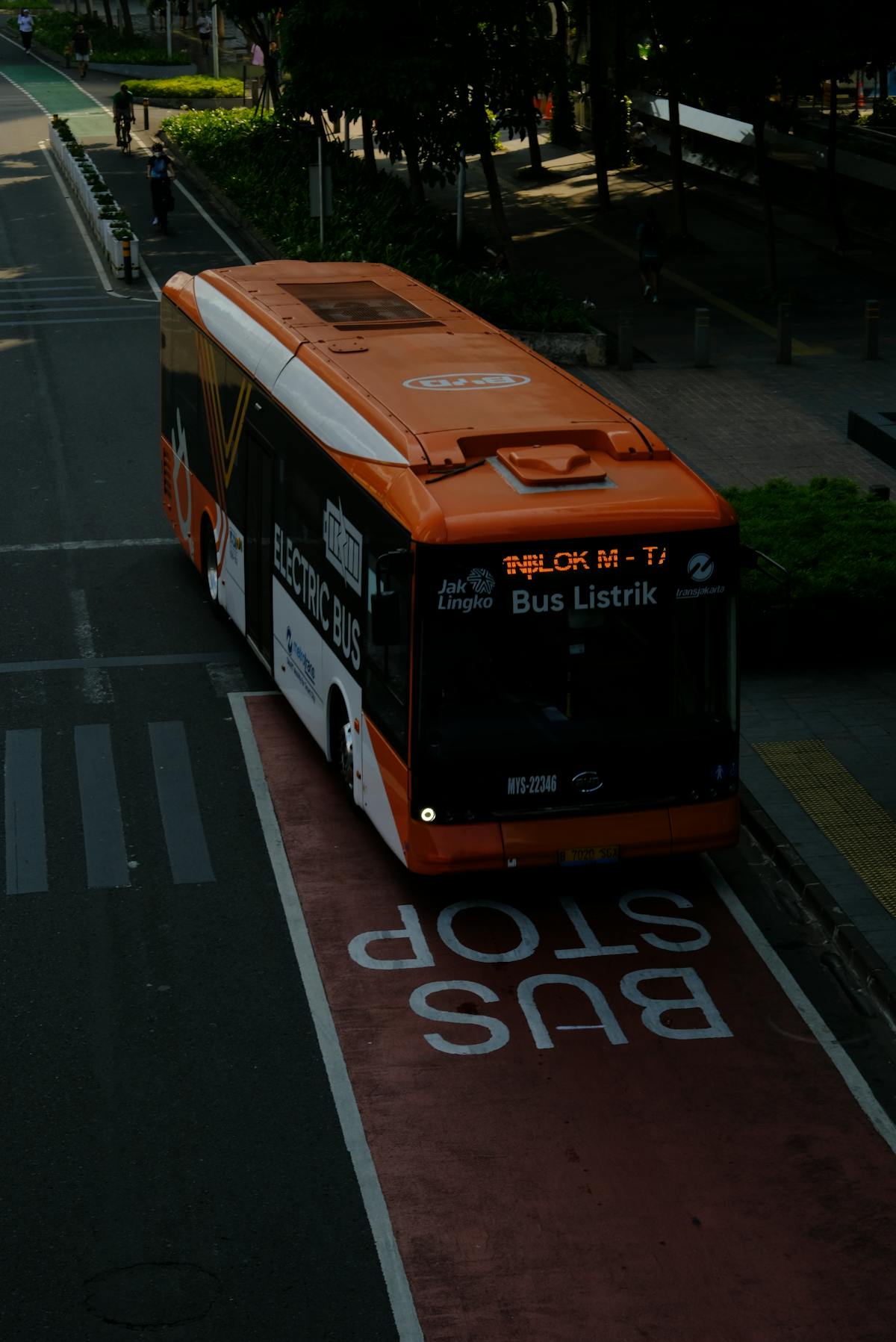
In passenger road transport, the electrification of bus fleets is now an operational reality. The public transport sector has moved significantly ahead of freight transport, with depots already heavily engaged in the transition to electric.
That said, the stakes remain high. As in road freight, charging buses involves large volumes of energy, strict time constraints and direct dependence on the site’s electrical availability. The major difference lies in the punctuality requirement: a bus that does not leave on time immediately affects network operations and quality of service for passengers.
In this context, charging must be thought of as an operational tool in its own right. Chargekeeper is among the first CPMS platforms engaged in the passenger transport sector and today supports some of the largest French operators in electrifying their depots. The platform was designed to meet the specific needs of public transport: charging scheduling aligned with line timetables, real-time supervision, advanced energy management and adoption of communication standards such as VDV 261.
In the rest of this article, we look at the main challenges of charging electric buses in the depot and the concrete solutions that guarantee reliable, controlled operations.
Charging scheduling: guaranteeing on-time departures
In a bus depot, charging must be perfectly aligned with operating timetables. A bus that is insufficiently charged at departure immediately affects network regularity and quality of service. Charging scheduling is therefore the cornerstone of any depot charging strategy.
This scheduling relies on a precise model of operations. For each bus, the operator enters the vehicle’s technical characteristics into supervision (battery capacity, admissible power, charging type), along with operating parameters: lines served, arrival and departure times, rotations, target state of charge (SOC) and any opportunity-charging phases (for example with pantograph integration on certain lines). This data makes it possible to translate service constraints into concrete energy needs.
From this information, Chargekeeper automatically orchestrates charging sessions across the entire depot. The algorithms continuously recalculate needs based on timetable changes and the real state of the batteries, to guarantee that each bus reaches the required SOC before departure.
Smart charging: optimising energy without compromising service
Once charging is scheduled, the energy and economic challenge takes on its full importance. Bus depots concentrate high power demand within relatively short time windows, which can generate consumption peaks and significant costs if charging is not steered.
Smart charging dynamically adjusts the power delivered to charge points based on the site’s electrical capacity, grid constraints and operating priorities. By smoothing demand and intelligently arbitrating between buses, Chargekeeper makes it possible to respect timetables while avoiding exceeding power limits and incurring extra energy costs.
The platform natively offers several smart charging scenarios adapted to the realities of bus depots: prioritisation of certain lines, differentiated management between overnight charging and opportunity charging, power limiting by zone or by station. These scenarios evolve continuously through contact with operators and partners, to meet the specific needs of each network.
Advanced alerting: anticipating incidents before they affect the network
In bus depots, the majority of charging takes place at night. The ability to detect anomalies quickly is therefore essential to relieve on-call teams and avoid incidents at departure time.
The advanced alerting modules integrated into Chargekeeper make it possible to continuously monitor the status of charge points and charging sessions. Operators can be alerted in the event of a charging stoppage, a charge curve deviation, an SOC inconsistent with the timetable or a hardware fault, for example. Notifications are delivered according to configurable rules — by email, SMS or in-app notification — based on the level of criticality and taking the on-call schedule into account.
This proactive supervision makes it possible to anticipate incidents and secure operations, addressing problems before they affect line punctuality.
Remote-start: automating service continuity
When charging interruptions occur, human intervention is not always necessary. In many cases, simply restarting the session is enough to resume charging.
Chargekeeper’s remote-start module is built on an intelligent, customisable agent able to analyse the causes of interruption and automatically trigger corrective actions. Rules can be defined according to various criteria: type of error, duration of the stoppage, SOC reached, vehicle concerned or service priority. The agent then restarts charging without manual intervention, within the limits defined by the operator.
This automation reduces contingencies to a strict minimum, limits on-call duties and guarantees that buses reach their required charge level on time.
VDV 261: supervision ready for tomorrow’s standards
The VDV 261 standard aims to standardise communication between electric buses, charge points and supervision systems. In particular, it makes it possible to exploit key vehicle data — state of charge, battery condition, energy needs — and to enable advanced functions such as intelligent preconditioning of the battery and cabin before departure.
While Chargekeeper is already ready for VDV 261 integration, the effective rollout of these features remains conditional on the compatibility of field equipment. Buses, charge points and communication infrastructure must natively support the standard to allow complete, reliable exchange of data. In this context, supervision plays a central role in gradually supporting the industrialisation of the standard, securing the data flows and preparing bus depots for the changes to come.